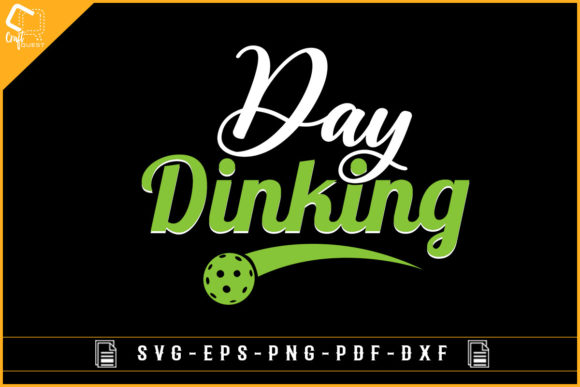
Day Dinking Funny Pickleball Drinking
As a designer who spends more time than I care to admit staring at stitch charts and debating thread color palettes, I approach every new machine embroidery design with a mix of optimism and skepticism. The market is flooded with novelty phrases, but few strike the right balance between humor, legibility, and aesthetic charm. That is exactly where my review of the Day Dinking Funny Pickleball Drinking file lands. This isn't just another clipart dump; it feels like a deliberate embroidery project concept designed for people who understand that craft is about personality as much as precision.
I received this asset under the broad umbrella of Crafts and Graphics, specifically formatted as a digital embroidery file alongside cutting files. My goal was to evaluate its viability for real-world application—specifically, whether it holds up when translated from pixels on a screen to threads in a hoop. After running several test stitches and visualizing various end-use scenarios, here is my honest breakdown of how this design performs in the wild.
The First Impression: Mood and Layout
The immediate visual hook of the Day Dinking Funny Pickleball Drinking design is its playful energy. The phrase itself taps into a very specific cultural moment—the intersection of hobby culture and social relaxation. For an embroiderer, typography is often the hardest element to execute flawlessly. If the kerning is off or the font weight is inconsistent, the entire piece looks amateurish.
In this case, the layout feels balanced. It avoids the cluttered look that plagues many novelty designs. The text is likely paired with a graphic element (implied by the "pickleball" theme), creating a cohesive unit rather than disjointed parts. When I first looked at the vector preview, I noted that the curves are smooth, which suggests that any satin stitch outlines will lay flat without puckering. The visual personality is casual but polished, making it suitable for both a quick weekend gift and a curated boutique listing.
Real-World Application: Where Does It Shine?
Let’s talk about actual products. A common mistake designers make is choosing a design that looks great on a digital mockup but fails on physical fabric. I envision the Day Dinking Funny Pickleball Drinking design thriving in a few specific categories:
- Tote Bag Design: This is perhaps the strongest candidate. A canvas tote embroidered with this phrase captures the essence of the pickleball lifestyle perfectly. It serves as a functional accessory that doubles as a conversation starter. The design’s scale likely works well on the front pocket or center panel of a standard tote.
- Sweatshirt Embroidery: For the cooler months, this design translates beautifully onto fleece or cotton-blend hoodies. The humor resonates strongly in apparel contexts, especially for team uniforms or club merchandise. It adds a layer of brand consistency for small shop owners looking to create recognizable custom apparel.
- Embroidered Patch: If you are selling accessories, turning this into a detachable patch offers versatility. Customers can attach it to jackets, hats, or backpacks. The self-contained nature of most novelty phrases makes them ideal for patch applications, provided the border is clean.
- Kitchen Towels and Aprons: While less obvious, the "drinking" aspect of the phrase lends itself well to kitchen decor. A high-quality linen tea towel with this embroidery becomes a perfect personalized gift for housewarmings or holidays. It bridges the gap between utility and humor.
Technical Considerations and Stitch Density
Before committing to a full production run, any experienced designer knows you must scrutinize the technical specs. While I cannot verify the exact stitch count without the source file open in my digitizing software, I can advise on what to look for regarding Day Dinking Funny Pickleball Drinking.
Stitch Density is critical. Novelty designs often suffer from overly dense fill stitches that cause the fabric to pucker or the needle to break. If this design uses large areas of solid color, ensure the density is appropriate for the fabric type. For lightweight fabrics like t-shirts, a lighter density or a combination of running stitch and sparse fills will prevent distortion. Conversely, for sturdy materials like denim or canvas, a slightly denser approach might be needed to cover the weave effectively.
Pay close attention to the thread colors. The contrast between the thread and the base fabric will determine readability. On dark fabrics, light-colored threads are essential, but they may require a backing stabilizer to prevent show-through. On light fabrics, darker threads offer sharp definition. I always recommend testing your design in black and white mode first; if the shapes remain distinct without color, the design has strong structural integrity.
Where to Use Caution
Not every surface is created equal. There are specific scenarios where this design might struggle:
- Small Hoop Sizes: If the design includes intricate details or wide lettering, forcing it into a tiny hoop can result in cropped elements or excessive trimming. Always check the dimensions against your machine’s minimum hoop size.
- Stretchy Fabrics: Knits and jersey materials are prone to shifting. Without proper tear-away or cut-away stabilizers, the tension of the fill stitch can warp the garment. Test on scrap pieces of the same material before stitching on the final product.
- Curved Surfaces: Applying this to caps or curved hat fronts requires careful positioning. The text needs to follow the curve naturally without distorting the letters. If the design is rigidly straight, it may look awkward on a rounded brim.
Impact on Product Value and Customer Trust
For Etsy sellers and small business owners, the quality of the embroidery directly impacts perceived value. A sloppy stitch job screams "cheap," while a clean, precise execution signals professionalism. The Day Dinking Funny Pickleball Drinking design, assuming it is well-digitized, offers a high potential for customer satisfaction because it aligns with current trends.
When customers buy a handmade item, they are buying into a story. This design tells a story of leisure, friendship, and fun. It enhances the handmade presentation by adding a personal touch that mass-produced goods lack. Furthermore, using trendy phrases increases the likelihood of social media sharing. Customers love tagging their purchases, which provides free marketing for your craft business.
Practical Designer Notes for Success
To ensure the best results with this digital embroidery file, follow these practical steps:
- Test on Scrap Fabric: Never stitch directly on your final product. Use scraps to check tension, thread compatibility, and stabilizer choice.
- Check Licensing: Before selling finished items, confirm the commercial use rights. Some design assets allow personal use only, while others permit limited commercial sales. Clarity here protects your commercial embroidery venture.
- Inspect Small Details: Zoom in on the original file. Are there tiny elements that might get lost in stitching? If so, consider simplifying the design or adjusting the scale.
- Use Proper Stabilizer: The right stabilizer is invisible but vital. It supports the fabric during stitching and ensures the finished product remains durable through washing.
- Compare Backgrounds: Visualize the design on both light and dark fabrics. Ensure the color palette works across your product line.
In conclusion, the Day Dinking Funny Pickleball Drinking design is a versatile addition to any embroiderer’s library. It balances humor with style, making it suitable for a wide range of holiday gifts, wedding gifts, and everyday wear. By paying attention to the technical details and choosing the right substrates, you can transform this simple graphic into a standout embroidery project that resonates with pickleball enthusiasts and craft lovers alike.